Training Programs
The MSDCoE Training Program supports Early-Stage Investigators (those with 10 years of experience or less) and trainees interested in maternal health research in the Mississippi Delta. Training activities emphasize community-engaged research methods, implementation science, and collaboration across academic and community settings. The program is designed to build research capacity while fostering the next generation of maternal health researchers.
PUBLIC HEALTH RELEVANCE
- The Jackson State University (JSU) – Mississippi Delta Research Center of Excellence for Maternal Health was established to address preventable maternal mortality, decrease severe maternal morbidity, and promote maternal health in partnership with the Mississippi Delta community.
- The Center is committed to developing and training Early Stage Investigators (ESIs) and Predoctoral students to become independent maternal health researchers and maternal health scholar-practitioners.
Overarching Goal
Establish a training program for early-stage investigators that addresses the interpersonal and structural factors that affect maternal outcomes. Our research training program will foster culturally responsive research that addresses maternal health disparities by training and mentoring (a) postdoctoral trainees, (b) junior faculty, and (c) other early-stage investigators in the Mississippi Delta.
Specific Aims/Objectives
Aim 1. Increase the number of postdoctoral trainees, junior faculty, and other early-stage investigators engaging in research related to biological, behavioral, environmental, sociocultural, other factors that affect (a) pregnancy-related and pregnancy-associated morbidity and mortality; and (b) severe maternal morbidity in the Mississippi Delta. Using a cohort model, we will train six early-stage investigators per 2-year cohort; across the funding period, we anticipate training 18 early-stage investigators.
- Training will involve weekly virtual training sessions, three in-person workshops (at JSU, MSU, and HSPH), and individual development plan-based
- The long-term goal is to train a critical mass of independent investigators who are capable of (i) engaging in culturally responsive maternal morbidity and mortality research and (ii) advancing the maternal health field.
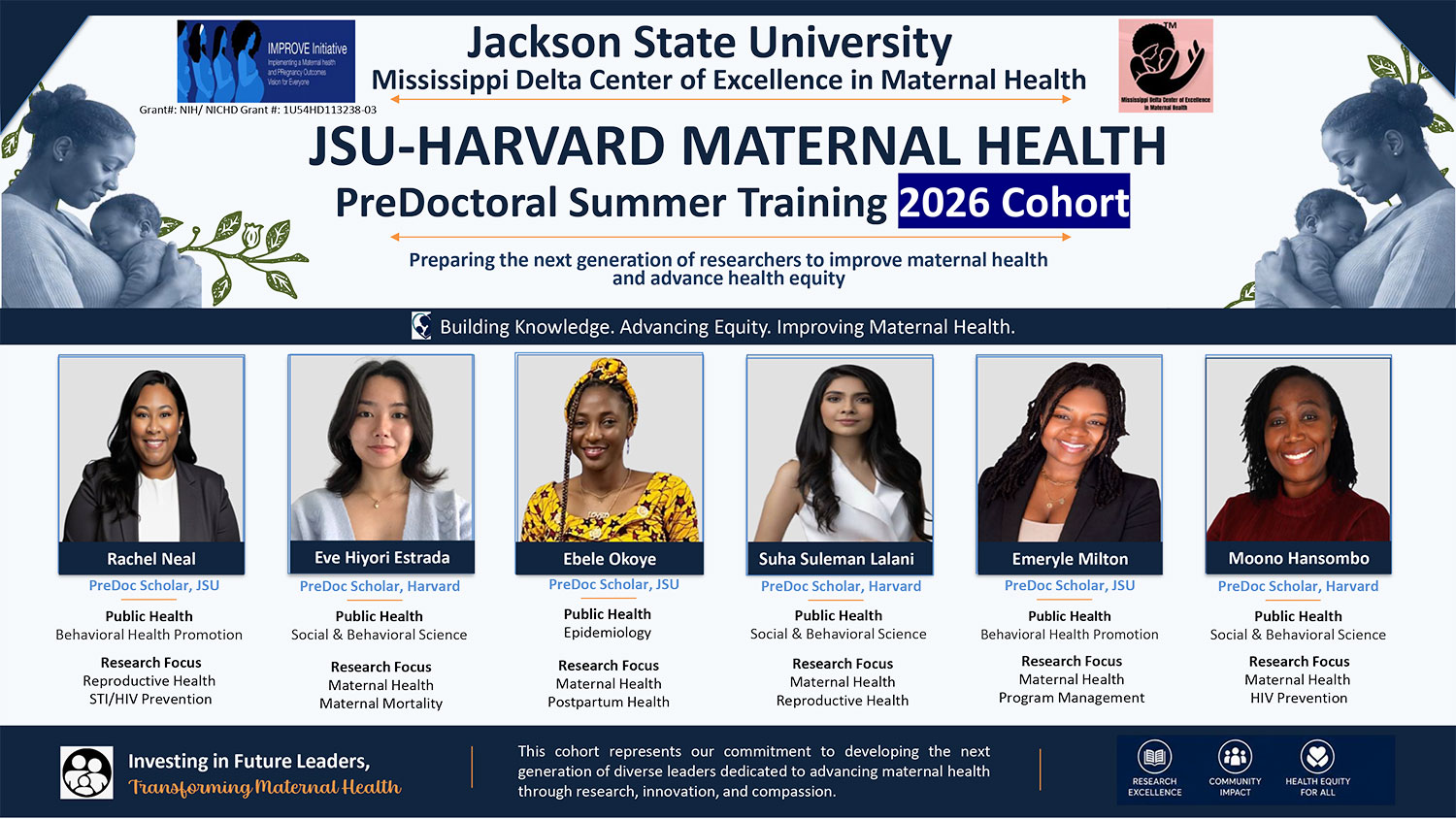
Aim 2: Provide applied research experiences to predoctoral fellows as the next generation of maternal health research professionals. We will train six predoctoral fellows per year (four from Mississippi and two from Harvard); across the funding period, we anticipate training 36 predoctoral fellows.
- Trainees will have the opportunity to collaborate with community partners to identify, develop, implement, and disseminate research projects related to maternal morbidity and mortality.
- Pre-docs will utilized existing data for a population-based health practicum through a unique partnership model.
Aim 3: Provide outreach opportunities to reach a broader audience. The training program will disseminate the existing evidence, best practice, and new knowledge on maternal health to young scientists in training as well as to a wider audience of stakeholders in the form of workshops, research forums, trainings, publications, and social media activities.
Dissemination activities will be conducted in close partnership with community partners who will offer innovative virtual and in-person opportunities.
The Bigger Picture
Our extensive research training program for early-stage investigators will support the goals of the center’s research projects, address the interpersonal and other factors that affect maternal health outcomes, and prepare the next generation of clinical researchers focused on improving maternal health outcomes.
Training Team

Dr. Henning Tiemeier
Principal Investigator
Social & Behavioral Science
Harvard SPH/ MSDCoE

Dr. Natalie Slopin
Co-Principal Investigator
Social & Behavioral Science
Harvard SPH/ MSDCoE

Karen Ertel, PhD
Teaching Fellow
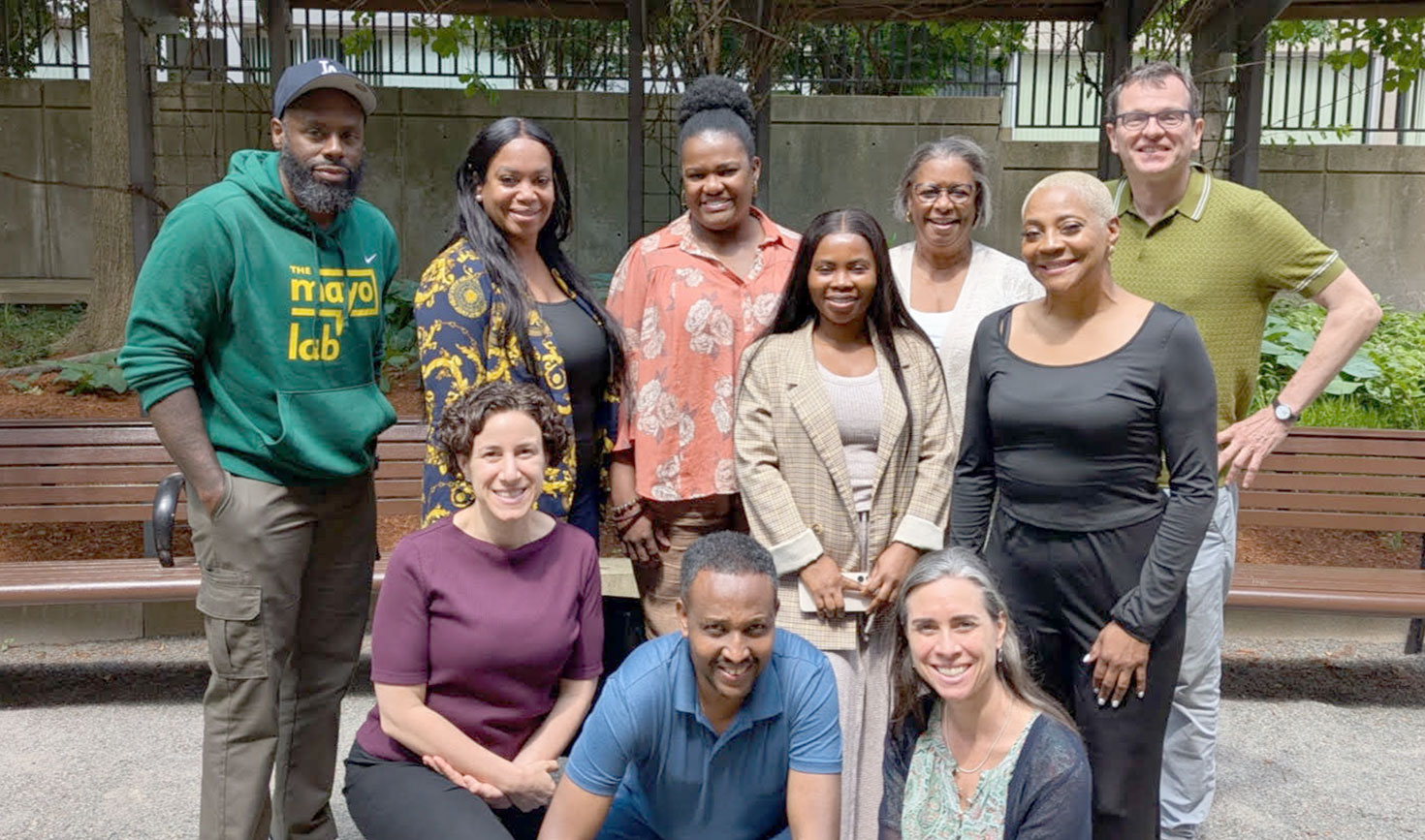
Introducing ESI Cohort 1 (2024-2026)