
Training Programs
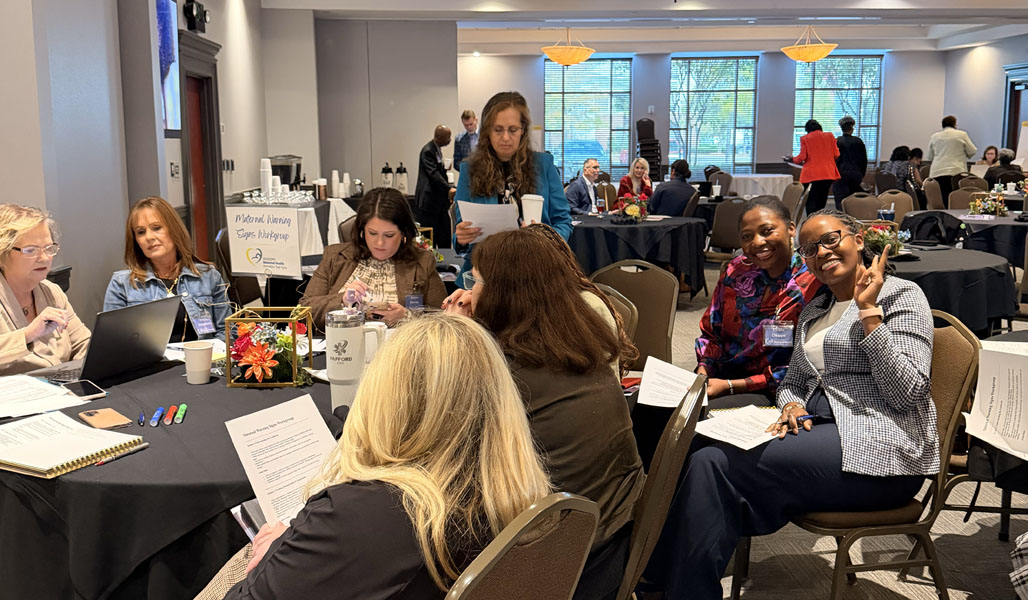
The MSDCoE Training Program supports early-stage investigators and trainees interested in maternal health research in the Mississippi Delta. Training activities emphasize community-engaged research methods, implementation science, and collaboration across academic and community settings. The program is designed to build research capacity while fostering the next generation of maternal health researchers.
Overview
The United States is the only industrialized nation with an increasing rate of maternal mortality. This statistic is even more alarming in racial and ethnic minority groups and socioeconomically disadvantaged and underserved rural populations. Poor maternal outcomes are largely a result of systemic inequities that create significant disparities in how women experience the healthcare system. Despite the urgent need to address maternal mortality, severe morbidity, and disparities, previous efforts have failed to improve maternal health outcomes. Notably, most research efforts to reduce maternal mortality and severe maternal morbidity have focused on clinical care and have not addressed the role of the maternal health workforce in the community. To effectively reduce maternal health inequities and improve outcomes, more research focused on structural and social determinants maternal health is needed, especially research conducted in underserved areas by researchers from those communities. To this end, our proposed Mississippi Delta Research Center of Excellence for Maternal Health will include a training program for early-stage investigators focused on addressing the interpersonal and other factors that affect maternal health outcomes in at-risk communities.
In meeting the challenges posed by the social determinants of health, there is increasing recognition of the importance of research conducted with people and in places with the greatest vulnerability. Our proposed training program will focus on early-stage investigators at two Mississippi universities, Jackson State University (JSU) and Alcorn State University, and will leverage existing resources in maternal health training within these universities, at the Southern Rural Development Center based at Mississippi State University (MSU), and at Harvard University. The Harvard T.H. Chan School of Public Health (HSPH) will lead the training program, drawing on its strong national reputation and long experience in maternal and child health training. Our collaborative approach will capitalize on the expertise of our program leads and community partners in maternal health systems and the strong existing relationships among the various participating institutions. The overarching goal of our research training program is to foster culturally responsive research that addresses maternal health disparities by training and mentoring (a) postdoctoral trainees, (b) junior faculty, and (c) other early-stage investigators in the Mississippi Delta.
We will achieve this goal through the following aims:
Early Stage Investigations
Learn more about training opportunities for early-stage investigators in maternal health research. Explore how the program supports research development and collaboration.